The Sacred City of Ayodhya
Ayodhya is not simply a destination; it is a living scripture, a city where every lane, every ghat, and every temple bell carries the weight of an epic that has shaped the spiritual imagination of an entire civilization. Believed to be the birthplace of Lord Ram, seventh avatar of Vishnu, Ayodhya has stood for millennia as one of the seven Moksha-dayini Puris, the sacred cities said to grant liberation to those who walk its earth with devotion. The Saryu river, which borders the city, is spoken of in the Ramayana itself, and to this day pilgrims descend her ghats at dawn to offer prayers exactly as devotees have done for generations before them.
In recent years, Ayodhya has entered a profound spiritual renaissance. The consecration of the grand Shri Ram Janmabhoomi Mandir has drawn millions of pilgrims from across India and the world, transforming the city's ancient lanes into a flourishing centre of devotion, craftsmanship, and renewed civic pride. Roads have widened, ghats have been restored, and a new international airport now welcomes travellers who arrive not for leisure in the ordinary sense, but for something rarer: a pilgrimage of the heart. The city today balances its timeless soul with quiet, dignified modern infrastructure built specifically to receive the devout.
Beyond the Ram Janmabhoomi itself, Ayodhya's mythological fabric extends into every corner of the city. It is here that Hanuman is believed to stand eternal guard at Hanuman Garhi, here that Sita worshipped at Kanak Bhawan, and here that Lord Ram is said to have taken jal samadhi at Guptar Ghat, departing the mortal world at the very spot where devotees now light lamps each evening. To walk through Ayodhya is to walk through the Ramayana itself, page by page, temple by temple.
A Sanctuary of Devotion
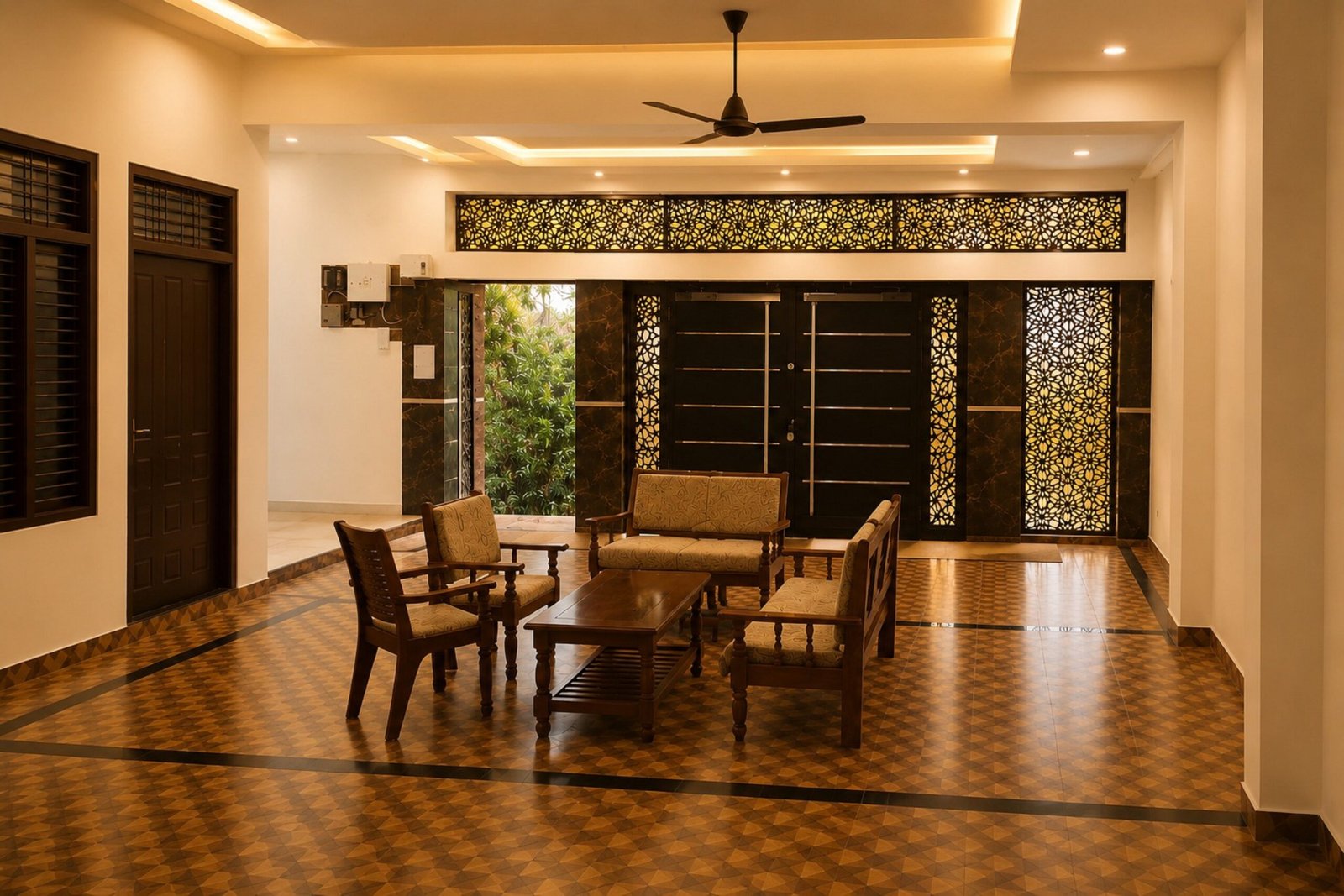
Shri Ramesht Palace was conceived with a singular intention: to offer the pilgrim not merely a place to sleep, but a space in which to settle the mind before and after darshan. Every element of the property, from its muted, contemplative interiors to the unhurried pace of its service, has been shaped around the understanding that our guests arrive on a journey that is spiritual long before it is logistical. We are not a hotel that happens to be near a temple; we are a sanctuary built in service of the pilgrimage itself.
The environment within Shri Ramesht Palace has been deliberately kept tranquil, free of excess noise, clutter, and distraction. Soft lighting, considered silence in the common areas, and a staff trained to anticipate rather than intrude, all combine to create a rhythm of calm that mirrors the reflective nature of a pilgrim's stay. Whether you arrive after a long overnight journey or before a pre-dawn visit to the Janmabhoomi, the property is designed to restore you quickly and gently, without ceremony or fuss.
Hospitality here is offered as a form of seva. Our team understands the particular needs of the pilgrim traveller: early darshan timings, family groups spanning three generations, elders who require unhurried assistance, and guests who wish simply to rest between temple visits in a room that feels private, secure, and dignified. Every premium comfort at Shri Ramesht Palace exists in quiet support of that larger purpose, so that your energies remain focused where they belong, on your darshan, your devotion, and your time in this sacred city.